ISRAELI CLOSE-COMBAT & SELF-DEFENCE
KAPAP Krav Maga in Singapore |
Avi Nardia's Israeli Close-Combat System
Preserving the heritage. Continuing the practice.
Evolving the training.
KAPAP Krav Maga is an Israeli close-combat and self-defence system associated with Avi Nardia, integrating striking, grappling, weapons-related training and practical decision-making.
Leon Koh serves as a KAPAP Custodian under Avi Nardia, entrusted with preserving the system's technical heritage, supporting its instructors and maintaining continuity in its teaching and development.
In Singapore, KAPAP continues through two training pathways. Individuals and organisations seeking dedicated KAPAP instruction can train directly with Leon Koh, while CADRE Academy incorporates KAPAP principles and methods within its broader Integrated Jiu-Jitsu (IJJ) programme.
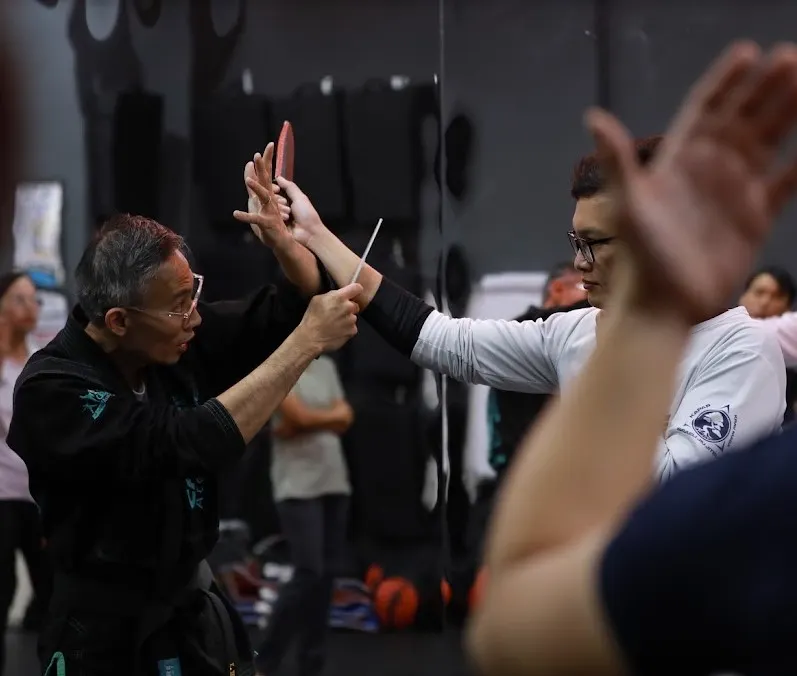
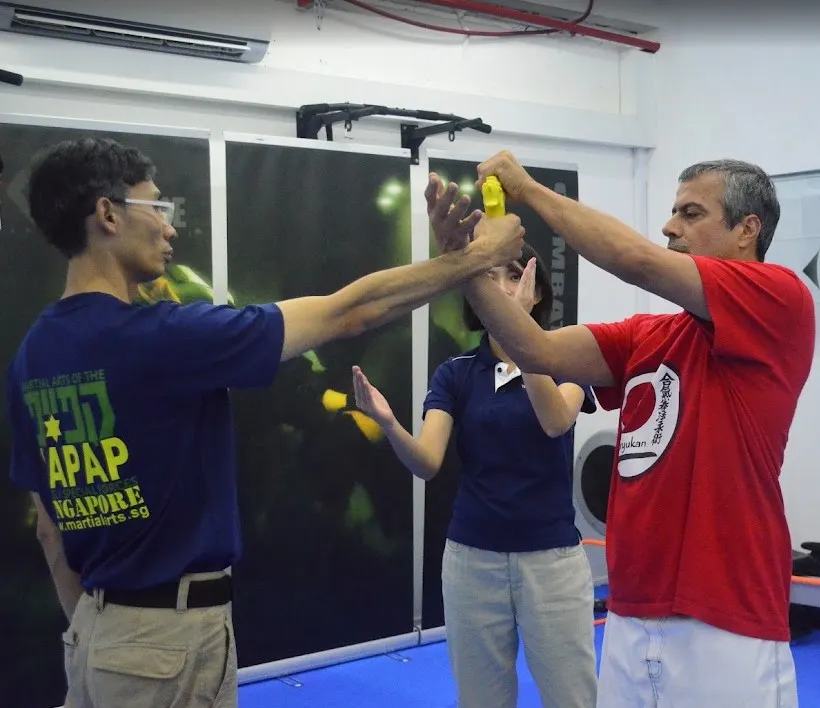
Avi Nardia (right) and Leon Koh (left) during KAPAP training in Singapore.
ROOTS OF ISRAELI CLOSE-COMBAT
What Is KAPAP Krav Maga?
From Israel's early close-combat traditions to a modern system developed for YAMAM.
KAPAP stands for Krav Panim El Panim, meaning “face-to-face combat” in Hebrew. Its origins date to the Jewish defence organisations of pre-state Israel, where close-combat training drew upon boxing, wrestling, jiu-jitsu, stick fighting and other practical fighting disciplines.
The modern KAPAP system associated with Avi Nardia emerged around 2000, when Israel's elite counter-terrorism unit, YAMAM, sought to update its hand-to-hand combat programme.
Having previously developed an updated close-combat curriculum for Israeli military personnel, Avi Nardia was selected to instruct YAMAM following a competitive selection process involving numerous candidates, including former unit members.
Working with Lt. Colonel Chaim Peer, Nardia developed a new close-quarters combat system that integrated knowledge from different martial arts and addressed the operational requirements of the unit. He revived the historical name KAPAP to distinguish this approach from established Krav Maga systems.
What Makes Modern KAPAP Different?
Modern KAPAP was not conceived simply as another collection of self-defence techniques. Its development was driven by the need to examine, integrate and apply different martial arts methods within demanding operational contexts.
Rather than being confined to a single technical tradition, KAPAP draws upon striking, grappling, positional control, weapons-related skills and the principles that connect them.
Originally developed for specialised operational training, Avi Nardia's KAPAP methodology subsequently expanded into civilian self-defence and international martial arts instruction.
THE PHILOSOPHY BEHIND MODERN KAPAP
Avi Nardia's Approach to KAPAP
Principles over techniques. Understanding over imitation.
For Avi Nardia, KAPAP is not defined by a fixed collection of techniques or by loyalty to any single martial art. Its strength lies in understanding the principles that govern physical interaction and applying them appropriately to different situations.
Drawing upon his experience in military and law-enforcement training, alongside his extensive study of martial arts, Nardia developed an approach that examines how different methods work, why they work and where their limitations lie.
Understanding the Principles
Modern KAPAP emphasises fundamental concepts such as balance, relative positioning, leverage, movement, distance and points of contact.
These principles connect techniques drawn from striking, grappling and weapons-related disciplines. Rather than treating each technique as an isolated response, practitioners learn to recognise the underlying problems and identify appropriate solutions.
Learning Through Exploration
A defining feature of Avi Nardia's teaching is the encouragement to question, explore and test what is being taught.
A technique that works in a cooperative demonstration may not remain effective when distance, resistance, timing or the environment changes. Training therefore requires more than repetition of prescribed movements. It requires understanding, experimentation and adaptation.
This approach recognises that no single martial art or technique provides every answer.
Continued Evolution: Close Distance Combat and Integrated Jiu-Jitsu
As Avi Nardia's teaching and research have continued to evolve, his focus has expanded towards Close Distance Combat (CDC) and Integrated Jiu-Jitsu (IJJ).
CDC concentrates on the problems and decisions arising during close-distance confrontations, while Integrated Jiu-Jitsu provides a broader martial arts framework encompassing striking, grappling, weapons-related training and practical self-defence.
Both reflect the continuing development of principles and methods explored through KAPAP, while addressing different aspects of training and skill development.
KAPAP remains an established system with its own identity and continuing practice. Its heritage is maintained through Leon Koh's custodianship, while Avi Nardia continues to develop CDC and Integrated Jiu-Jitsu.
PRESERVING THE HERITAGE. CONTINUING THE PRACTICE.
Leon Koh — KAPAP Custodian
Continuing the teaching, development and heritage of KAPAP under Avi Nardia.
Leon Koh is a senior KAPAP instructor and custodian under Avi Nardia, entrusted with maintaining the system's technical heritage, supporting its instructors and ensuring continuity in its teaching and development.
Recognised by Avi Nardia as a 10th Dan in Israeli Jiu-Jitsu, Leon's longstanding relationship with Avi reflects years of training, teaching and involvement in the development and dissemination of KAPAP.
As Avi Nardia directs his attention towards the continued development of Close Distance Combat (CDC) and Integrated Jiu-Jitsu (IJJ), Leon maintains KAPAP's established identity and ongoing practice.
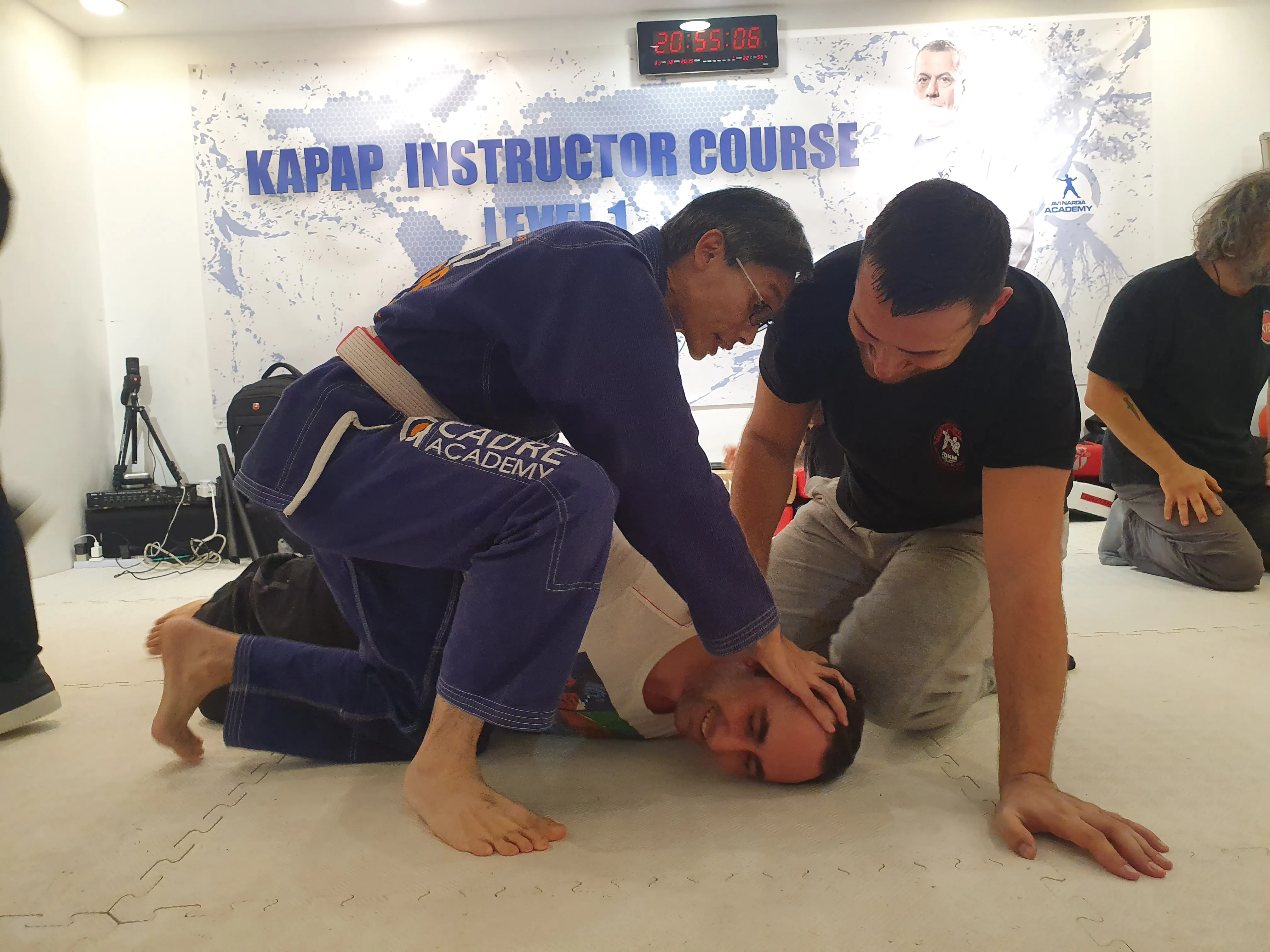
KAPAP Remains an Active Training System
KAPAP has not been discontinued or replaced. Its principles and methodology continue through dedicated KAPAP instruction and through their integration into contemporary self-defence training.
Individuals, instructors and organisations seeking specific KAPAP training or guidance may engage directly with Leon Koh.
At CADRE Academy in Singapore, the regular self-defence curriculum is delivered through Integrated Jiu-Jitsu, while dedicated KAPAP instruction remains available through Leon's personal training offerings.
UNDERSTANDING ISRAELI CLOSE-COMBAT SYSTEMS
KAPAP vs Krav Maga: What's the Difference?
Shared historical roots. Different paths of development.
KAPAP and Krav Maga are both associated with Israeli close-combat and self-defence training. Although the terms are sometimes used interchangeably, they do not refer to one universally standardised system.
Historical KAPAP and Avi Nardia's Modern KAPAP
The name KAPAP comes from Krav Panim El Panim, meaning “face-to-face combat” in Hebrew. It originated in the close-combat traditions of Jewish defence organisations before the establishment of Israel.
By the time Avi Nardia began developing his modern close-combat methodology around 2000, the historical term had largely fallen out of use.
Rather than inventing an entirely new name, Nardia chose to revive KAPAP, reconnecting his contemporary system with Israel's earlier close-combat heritage.
He initially adopted the designation KAPAP – Israeli Krav Maga, using the reference to Israeli Krav Maga as a tribute to the many individuals and disciplines that had contributed to the development of Israeli martial arts.
Over time, the name was shortened to KAPAP Krav Maga.
Following legal claims concerning the use of the term Krav Maga, Nardia elected to retain the name KAPAP independently.
Today, KAPAP identifies the modern system associated with Avi Nardia while acknowledging a historical tradition that predates its contemporary development.
SPECIALISED COUNTER-TERRORISM CONTEXT
KAPAP Krav Maga
Krav Panim El Panim — Face-to-Face Combat
MODERN DEVELOPMENT
Avi Nardia, working with Lt. Colonel Chaim Peer, around 2000.
OPERATIONAL ASSOCIATION
YAMAM — Israel's elite police counter-terrorism unit.
TRAINING APPROACH
A multidisciplinary methodology integrating striking, grappling, weapons-related skills and adaptable principles.
IDENTITY
Revives the historical KAPAP name for Avi Nardia's modern system.
BROADER MILITARY TRAINING CONTEXT
Krav Maga
Contact Combat
MODERN DEVELOPMENT
Imi Lichtenfeld, particularly through his work following the establishment of the IDF in 1948.
OPERATIONAL ASSOCIATION
Israel Defense Forces (IDF) — broad military close-combat instruction.
TRAINING APPROACH
Practical hand-to-hand combat and self-defence instruction developed for personnel with varying experience and abilities.
IDENTITY
Developed through Lichtenfeld's teachings and subsequently expanded through different Krav Maga organisations.
Different Origins. Different Approaches to Learning.
The operational environments in which modern KAPAP and Krav Maga developed influenced not only their training requirements, but also their approaches to instruction.
While Krav Maga became established within the IDF's broader military training structure, Avi Nardia's modern KAPAP developed through the specialised requirements of YAMAM, drawing upon knowledge and methods from multiple martial arts disciplines.
Central to Nardia's approach is the understanding that techniques are expressions of underlying principles, rather than fixed answers to every situation.
Students are encouraged to question, explore and test what they learn, developing an understanding of why something works, when it applies and how it may need to change.
This emphasis on principles, experimentation and continuous refinement allows the methodology to evolve as new knowledge, experiences and training demands emerge.
In this approach, adaptability is not simply an outcome of training. It is part of how the system is taught and developed.
CONTINUING THE PRACTICE
How KAPAP Continues Today
Two training pathways. A shared commitment to practical, adaptable self-defence.
KAPAP continues through dedicated instruction and through the application of its principles within contemporary martial arts training.
Whether you are seeking specific KAPAP training or looking for regular self-defence classes in Singapore, there are different ways to explore this methodology.
For individuals, instructors and organisations seeking specific KAPAP instruction.
Leon Koh continues to provide dedicated KAPAP training, drawing upon his experience and longstanding work under Avi Nardia.
Training can be tailored to the needs of individuals, martial arts instructors, professional groups and organisations seeking focused instruction in KAPAP principles and methods.
Enquiries about dedicated training, instructor development and organisational programmes can be directed to Leon Koh.
For those seeking regular, structured martial arts and self-defence training.
CADRE Academy's regular self-defence classes are taught through Integrated Jiu-Jitsu (IJJ), a broader martial arts approach developed under Avi Nardia.
IJJ incorporates principles and methods explored through KAPAP alongside striking, grappling, positional control, weapons-related training and other elements of jiu-jitsu.
Students learn through structured practice, progressively developing their understanding, decision-making and ability to adapt to changing situations.
Train For Life.
Prepare For Reality
Contact
Tel: +65 6974 5844
© 2026 CADRE Self Defense & Martial Arts Academy. All Rights Reserved.
CADRE Self Defense & Martial Arts Academy
200 Upper Thomson Road,
Thomson Imperial Court
#01-08 Singapore 574424
#019-